Sarah Muscat Azzopardi sits down with four passionate locals who know every limestone corner of their respective hometowns, for the ultimate insider’s guide to Malta and Gozo’s capitals.
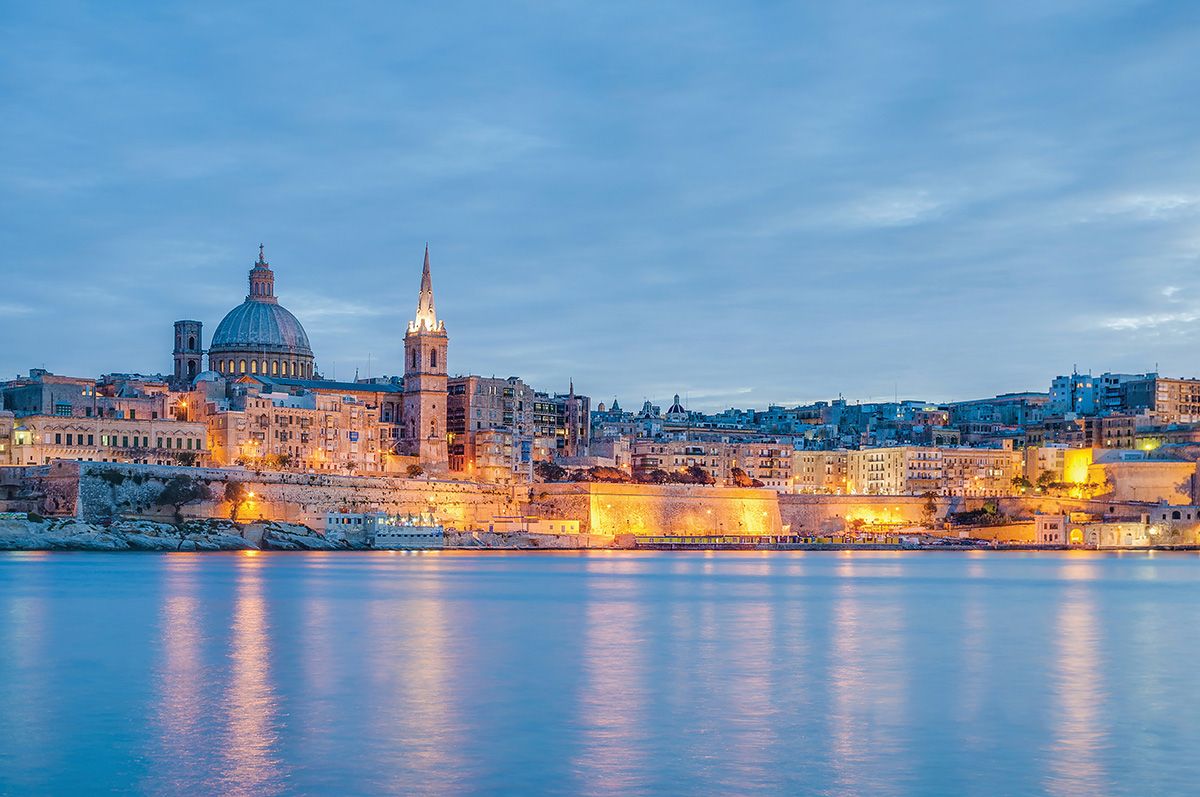
The Maltese Islands’ beating heart is split between two distinct yet captivating capitals. On the main island, Valletta, a UNESCO World Heritage Site built by the Knights of St John, is a treasure trove of Baroque architecture, history and modern culture. A wander through the Renzo Piano-designed City Gate leads visitors into a bustling maze of pedestrianised thoroughfares teeming with trendy boutiques, lively cafés and Michelin-starred restaurants.
From the awe-inspiring interiors of St John’s Co-Cathedral and Teatru Manoel – to the panoramic Grand Harbour views from the Upper Barrakka Gardens and the striking Malta International Contemporary Art Space (MICAS) just outside its walls, Valletta is a powerhouse that effortlessly bridges the past and the present.
A short ferry ride across the water, Gozo, Malta’s sister island, operates at a slower pace, and its capital, Victoria (known locally as Rabat), reflects this tranquil charm. Compact and steeped in history, the city is crowned by the magnificent Cittadella, a beautifully restored medieval fortress perched high upon a hill overlooking spectacular countryside views. Life here spills out from the bastions down into the vibrant hub of Independence Square, where locals gather amidst a rich tapestry of quaint alleyways and artisan shops.
Yet, while any good guide will rightly point you towards Valletta’s Grand Master’s Palace or Victoria’s towering Cittadella, these historic heavyweights are only half the story. To truly capture the essence of these cities – the hidden gems, quiet rituals and authentic pulse of the streets – you need to look beyond the obvious.
DR JOANNA DELIA is a medical doctor, aesthetic physician and owner of People&Skin, as well as a contemporary art collector and local patron, whose home-gallery in Valletta speaks to her self-proclaimed advocacy for all things beautiful.
“When I was younger, I used to assume that Valletta, and Malta, was somehow identical in form and spirit to our close Mediterranean neighbours – Sicily, Greece, Tunisia,” Dr Delia shares. “But after deciding to make this fortress my home, and a lot of frequent travel to these neighbours, I realised that although the Baroque architecture at a glance seems to remind one of Italy, that is really where the similarities end.”
So, how would she describe the capital? “Valletta is somehow part Sahara Desert outcrop with our loud Semitic shored greetings echoing its streets, part princely, proud city built by knights from the ten or so kingdoms they came from in the late 16th century, part British with the English language connecting us easily to the world and its vagabonds, and part Italian, because why not?”
Her ultimate advice to visitors is simple: “The trick with Valletta is to not walk down one straight road. It’s better to zigzag, also because of the steep inclines,” she smiles, recommending seeking out the smaller roads like St Nicholas Street, Eagle Street, St Zachary Street, and Strait Street.

“Forget the big, obvious restaurants and cafés,” she continues. “Have a coffee at Lot61, a spritz at Number43, lunch at the Valletta Amateur Football Club near the Lower Barrakka, and dinner at N Bistro in Strait Street. Most importantly, walk down the stairs next to the Mediterranean Conference Centre to the bare rocky shore around the city. The views, and silence, are spectacular. And then, go to Hastings Garden for sunset before hitting the bars.”
To Joanna, Valletta only gets better as the day goes by. “I am a night owl, and although I adore it all times, Valletta is a night owl too.” She suggests viewing the glowing capital in the evening from afar, around the coast in Ta’ Xbiex, before entering in the middle of the night, or the early hours. “Enter as late as possible... Valletta is safe and hospitable. Zigzag down the roads, look up at the balconies and cornices, the niches with statues in the corners at crossroads, and head to Strait Street, where you will catch a glimpse of the diversity of the Maltese and other residents with whom we share this city.”
For one unmissable experience, she says, “beeline to the Co-Cathedral, see the Caravaggio, then walk down to Gino’s kiosk or Maori by the shore and breathe in the sea. And don’t insult Valletta by thinking you can capture its essence in one afternoon. A solid 500-year-old lady who has been involved in intense moments of human civilisation from before most major world cities existed is not something you dedicate a single afternoon to.”
This article was first featured in the 100th edition of GuidemeMalta 2026.