Wow! Maltese NASA scientist helps reveal how life’s building blocks form in space...without water
This discovery was first reported locally by Times of Malta.
A Maltese scientist working with NASA has contributed to a groundbreaking study that could change our understanding of how life begins - and where it might arise beyond Earth.
Duncan Mifsud, together with Alfred Thomas Hopkinson and Sergio Ioppolo, is part of the research team behind the discovery, which was first reported by Times of Malta. Their findings reveal that the fundamental components of life can not only endure the harsh conditions of space but can also evolve into more complex structures there.
Published in Nature, the study challenges the long-held belief that water is necessary for the early chemical processes that lead to life.
Scientists have long known that organic molecules such as amino acids, sugars, and nucleotides exist in space and can reach Earth via meteorites. However, it was widely assumed that transforming these simple molecules into more complex ones, like proteins, required liquid water.
This new research suggests a different possibility.
By simulating the extreme environment of space, the team demonstrated that amino acids exposed to radiation can link together to form peptides, the building blocks of proteins, without any presence of water.
The Maltese scientist expected radiation to destroy the molecules but, to his surprise, instead they bonded together like Lego pieces.
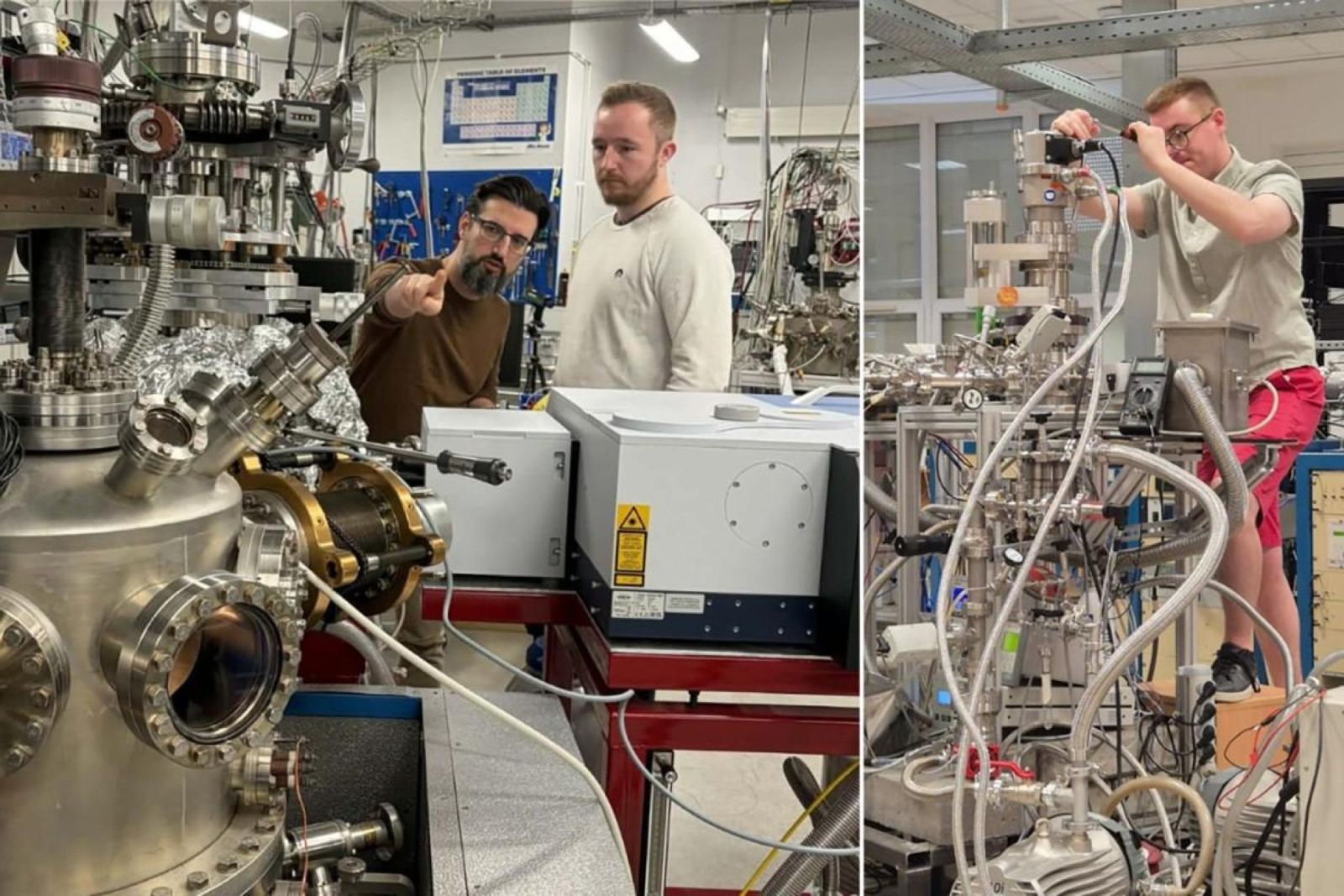
To conduct the experiment, researchers recreated deep-space conditions by cooling samples to nearly -253°C and placing them in a nearby vacuum. The molecules were then subjected to proton radiation using a particle accelerator. The outcome surprised the team.
Further analysis confirmed that peptides had formed, opening the door to the idea that life could begin in environments previously considered too hostile.
Hopkinson noted that the findings challenge the traditional concept of life emerging from a warm, water-rich ‘primordial soup’ on early Earth, which shows that the first steps toward life might not be as limited as we once believed.
The study builds on earlier research by Ioppolo, who had already shown that simple amino acids like glycine can form in space even without radiation.
Next, the team plans to test their conclusions using actual extraterrestrial material, including samples from the Bennu asteroid collected during NASA’s OSIRIS-REx mission.
If scientists detect these complex structures in space samples, it will support the idea that the chemistry of life existed before Earth itself!
Were you impressed by these findings?
Photo credits: Centre for Interstellar Catalysis