Hills, mountains, and plateaus within Christian countries all over the world are home to a series of cross-like structures or monuments, marking the nation’s sheer devotion towards God.
Of course, Malta is no different.
Perhaps one of the island’s most prominent Christian monuments is the Laferla Cross - a structure sitting at 200 metres above sea level and visible from surrounding towns and villages.
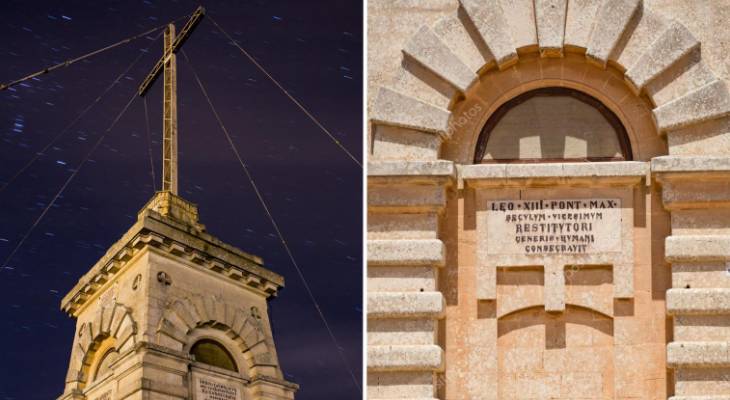
The Laferla Cross is situated on a plateau in Siggiewi, giving visitors an unadulterated view of Mdina, Valletta, and countless other Maltese localities.
Inside the limestone shrine upon which the Laferla Cross has been erected, one can find an altar, crucifix, and three religious paintings, the largest of which depicts the Virgin Mary.
The journey to the Laferla Cross, or Is-Salib tal-Gholja as it’s known in Maltese, is somewhat of an adventure in itself.
One way of getting to it is via a countryside road close to Dingli Cliffs, which eventually leads to an open, paved area near the cross.
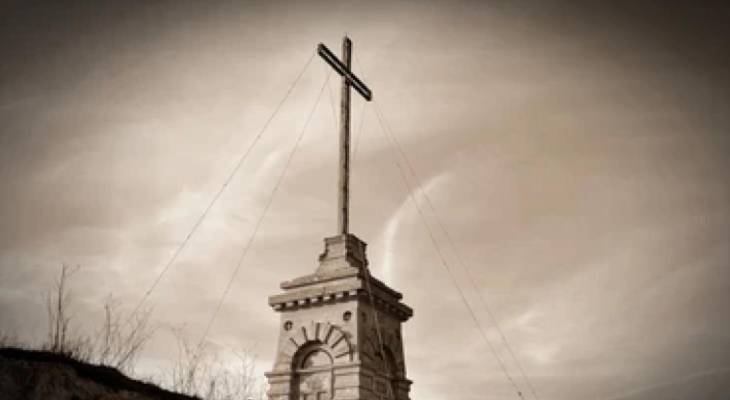
The other path, often referred to as ‘the pilgrim’s way’, is best-suited for pedestrians who are not averse to a mildly challenging hike. To walk this path, first park your car at the bottom of the hill near the Girgenti Vineyards. Then, simply make your way up the steep hill - it should take you around 15 minutes to reach the peak.
An annual pilgrimage organised on Maundy Thursday takes participants from the Siggiewi Square all the way up this passage. For this occasion, the path is adorned with statues showing scenes for the Passion of the Christ.
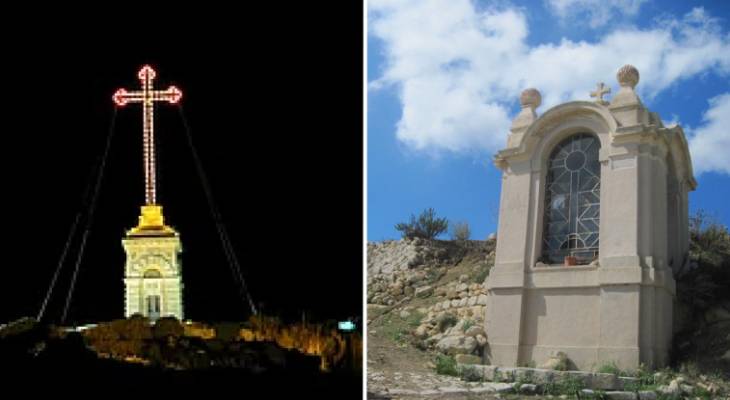
The cross was erected at the start of the twentieth century to commemorate the Holy Year of 1900. The Laferla name came from the man upon whose initiative it was constructed, one Reverend Paul Laferla.
The original Laferla Cross was built under the supervision of Ganni Mercieca in 1903. Just one year after its construction, the cross was blessed by the Archbishop, and an art painting of Our Lady of Sorrows was curated within the shrine. The cross was restored on numerous occasions and replaced with the exact replica in 1963 made of bronze and iron.
Have you ever visited this magical spot?