Recently published on the Facebook group Valletta Photos is this incredible and shall we say rare photo of the Slaves’ Prison in the capital city of Valletta! Officially known as la Gran Prigione, or the Grand Prison, the 16th century building has also been informally referred to as the Bagnio, meaning a prison for slaves.
Dark, desolate, and downright creepy, this image has taken us on a journey to find out more about this now lost historic location…
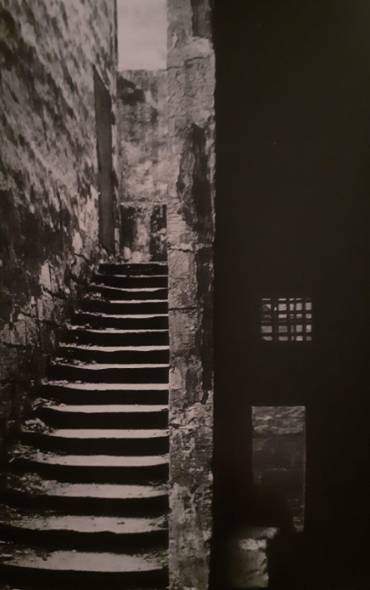
Joseph Attard via Facebook / Valletta Photos
In 2001, history graduate David Borg Muscat wrote an article called ‘Prison life in Malta in the 18th century: Valletta’s Gran Prigione.' The brilliant piece, published by the Malta University Historical Society, gave us some great insights on the old prison. Read on to find out more!
A step back in time
Said to have been located in front of the Lower Barrakka Gardens, overlooking the beautiful grand harbour, la Gran Prigione was set up during the time of the Order of St John to be officially used as a prison. In fact, it is said to have been the government’s principal jail, with the possibility to house more than 900 prisoners over three different stories. But don’t let the name fool you… The prison housed not only slaves, but also freemen, irrespective of their religion.
Apart from the many cells, the building also had an infirmary to ensure the health of its male prisoners, and an area for male hairdressing and shaving, which could also be used by the public against payment. In fact, it was not uncommon for people to visit the Slaves’ Prison for a haircut! An odd place to do so, in our opinion…
This being said, la Gran Prigione was still a place of retribution and not one of rehabilitation. Power over the prisoners was exercised through physical punishment, and many were assigned hard labour, primarily on the galleys. In this regard, healthy male convicts were of service to the state, even if they had played with the law…
The building is said to have served as a prison for many years, but its purpose changed with the occupation of the French and later the British. In fact, the location came to be used as a naval hospital, a school, and even an examination hall!
Later years
Unfortunately, the building which was once la Gran Prigione suffered damage during World War II and was consequently demolished, being replaced by a large block of flats, which remains to this day.
Even though the building no longer exists, considering its roots and date of inception, one might suggest that it would have made its rank among some of Valletta’s oldest buildings…