Professor Charlene Vella, Malta’s first female associate professor and full-timer specialising in the History of Art, has dedicated her career to uncovering the hidden traces of Malta’s Medieval and Renaissance past.
This is, she explains, an island where Roman catacombs were once used by Greek Basilian monks, where Byzantine influences coexist with Western European styles, and where the ghosts of old churches can be uncovered through scientific scanning techniques. Here, she speaks to Rebecca Anastasi about the emotional allure of Malta’s palimpsests.
The first thing that draws Professor Charlene Vella to a work of art is its affective resonance. “When I walk into an artistic space, I am attracted to a painting or a sculpture by how it makes me feel. I remember visiting the MOMA in New York a few years ago. I had gone with a broken foot, and my sister was wheeling me around. As soon as we entered, I felt the power of Frida Kahlo’s artworks on the walls. It’s that emotion, the discovery of the previously unknown. That is what pulls me in,” she says.
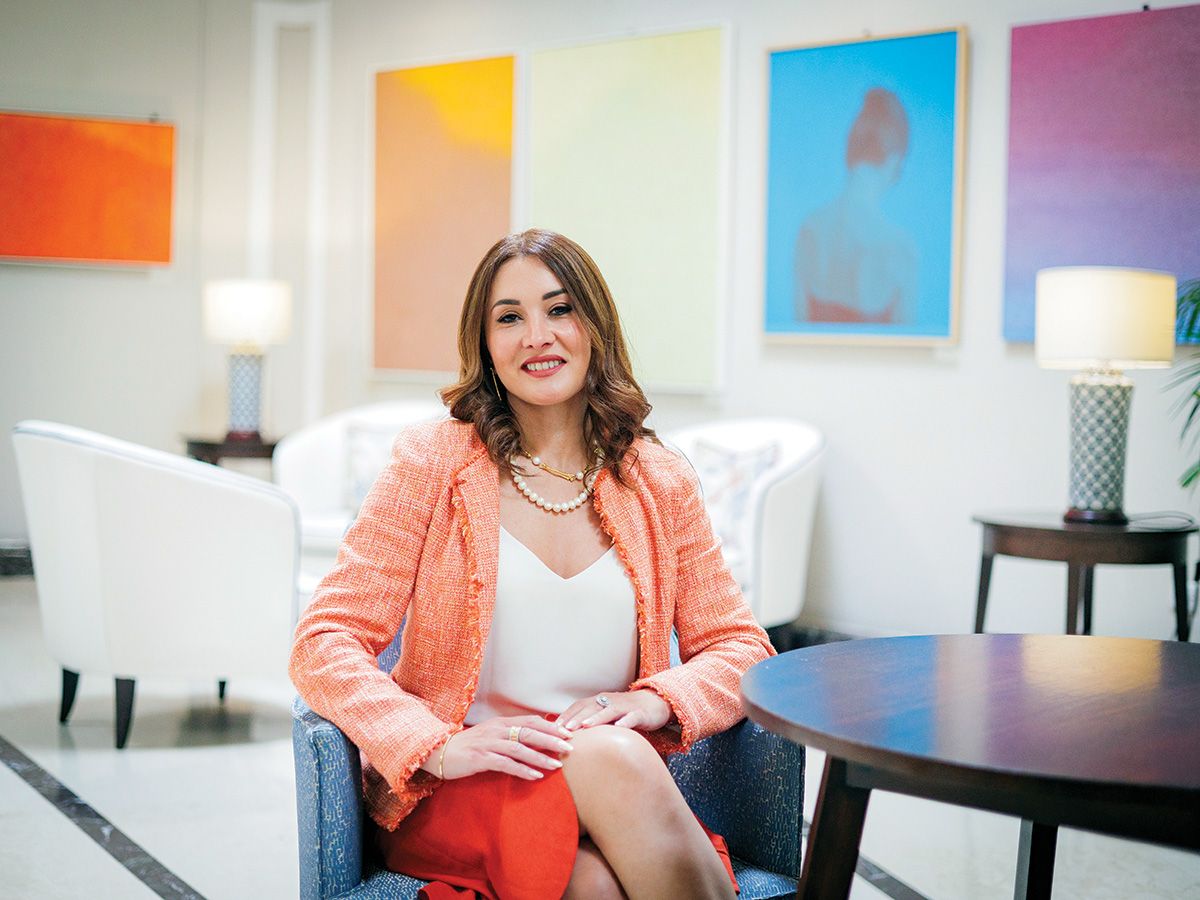
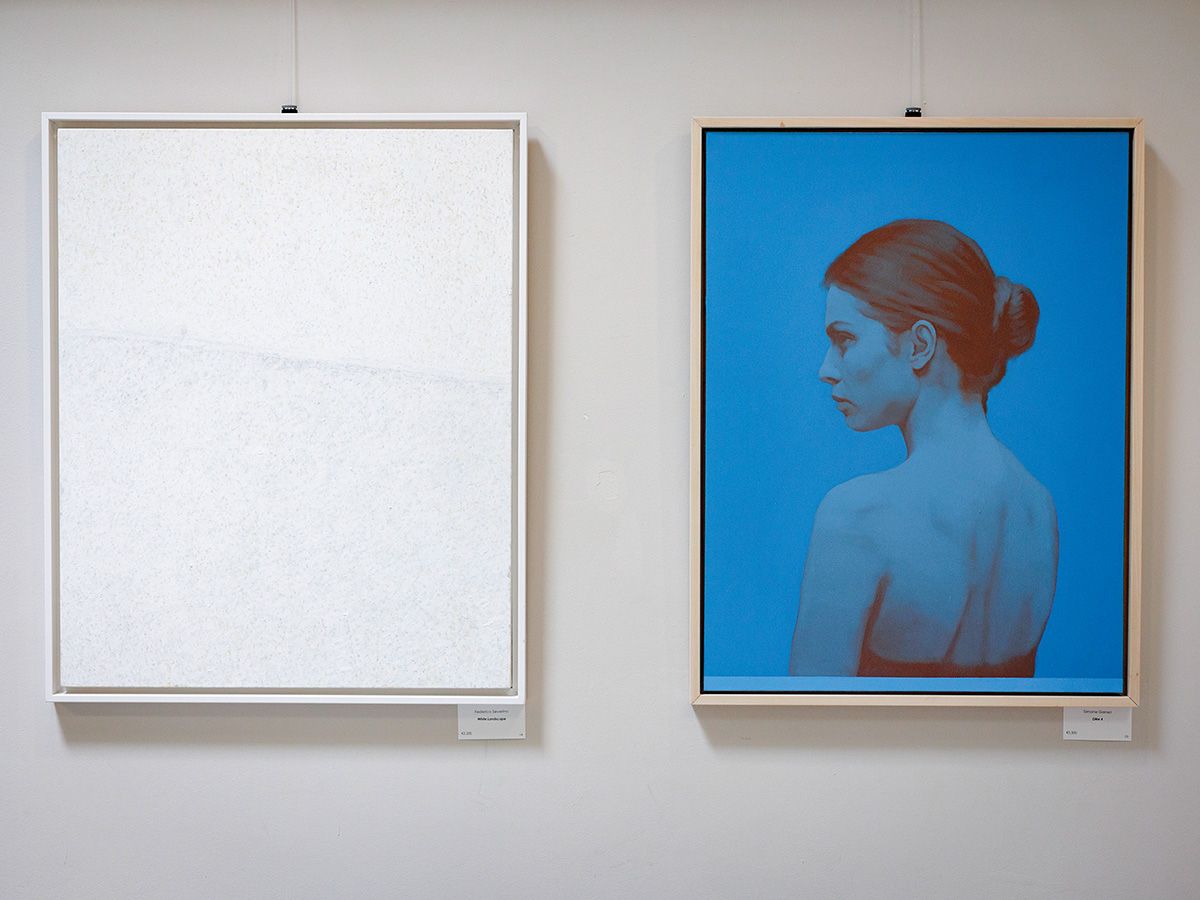
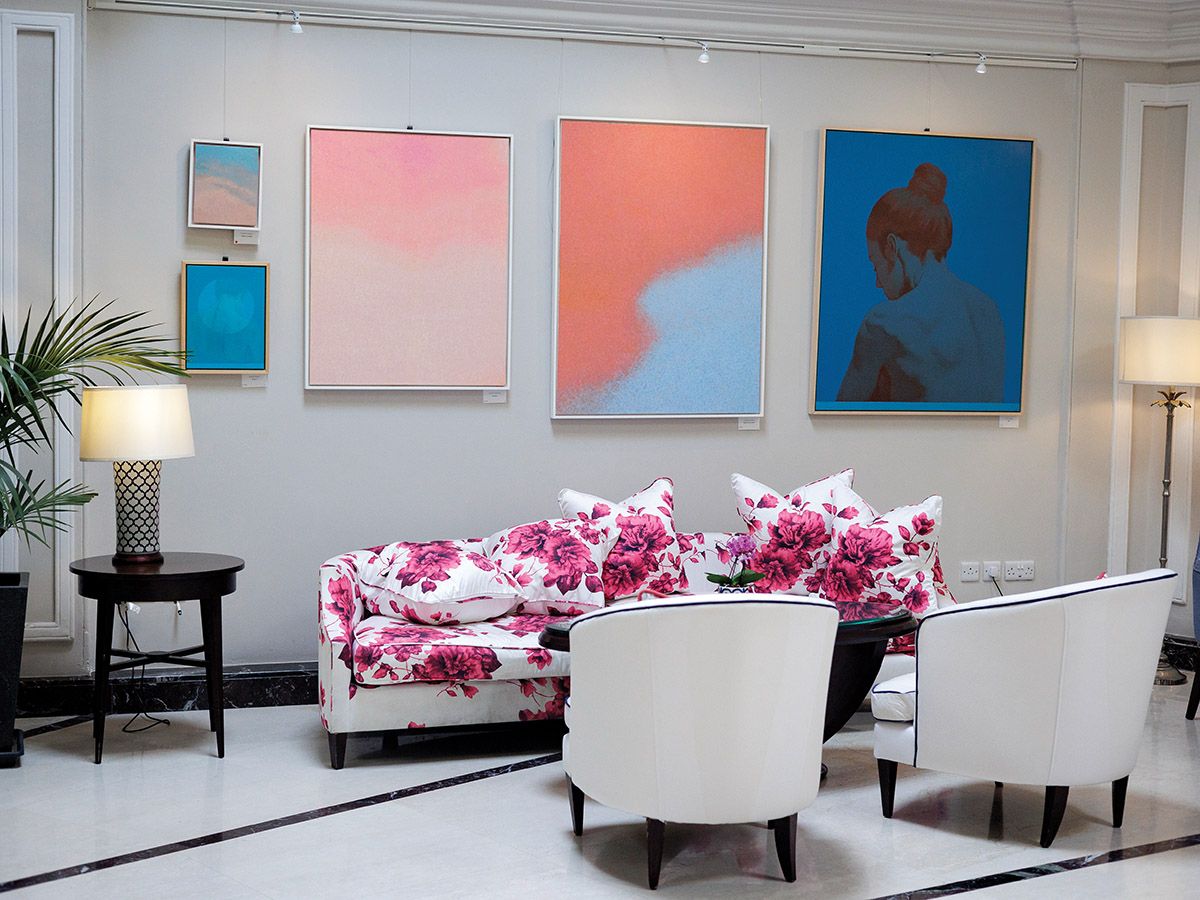
As the country’s first-ever female associate professor lecturing and researching Medieval and Renaissance Art History at the University of Malta, Prof. Vella is intimately familiar with the power of human creativity. She is deeply invested in academic research – teaching and mentoring dozens of students – while also remaining dedicated to outreach in the cultural sector. In this respect, Prof. Vella has curated numerous exhibitions across the country, one of which has recently taken place at The Phoenicia Malta, showcasing the work of two Sicilian artists: Simone Geraci and Federico Severino.
“I was introduced to the gallerist Antonio Sarnari, of Quam Galleria d’Arte, in Scicli by some mutual friends, and we’re collaborating on this exhibition. Geraci is inspired by the Mediterranean light, taking old 1930s photos of women and reworking that original material. Severino creates abstract landscapes in oil, layered with glazes and sometimes with pastel,” she adds.
Prof. Vella grew up in a household that valued literature, painting and music. “My grandfather played all sorts of instruments; he taught many of us, his grandchildren, to play violin, viola, double bass, guitar – and we’re 23 cousins!” she laughs. Her great-uncle was a Monsigneur who boasted a collection of books on art, which had fascinated the young girl. “I used to accompany my mother to his house simply to look at them. He had a poster of the Sistine Chapel and another of the Stanze di Raffaello (Raphael’s Rooms) in the Vatican – images I remember vividly,” she recalls.
Her fascination with artists and their work stems from this period in her life and from the fact that “there’s always a lot to learn. This is also what keeps us interesting, as people. A painting, or a sculpture, is so much more than what you see on the surface. In studying the history of art, we don’t just learn who the creator was, but we research the subject matter of the work; how something is made; or how the artist’s apprenticeship ultimately informs their oeuvre. I also work in digital art history, collaborating with scientists and restorers to look beyond the surface of the artefacts, to look underneath, at these layers of the past using X-ray and ultraviolet technology,” she explains.
Prof. Vella’s particular area of specialisation is Medieval and Renaissance art, with a specific interest in the work of the Sicilian painter, Antonello da Messina (1430-1479). She has also been recognised for her advocacy in supporting artistic practice and learning and, indeed, just last year, she was awarded the MARA Empowerment through Arts and Culture Award for her efforts.
Moreover, she is committed to furthering an understanding of women’s role in art history. “For instance, I lecture on Artemisia Gentileschi (early 17th century Baroque painter) who is an icon. Artemisia Gentileschi is often considered the earliest proto-feminist painter in the Western tradition.” Gentileschi had an inimitable style, Prof. Vella says, pointing to the pigments the artist used, such as a type of yellow that was “particular to her” and which is in fact sometimes referred to as ‘Artemisia gold’ or ‘Artemisia yellow’.
A little bit closer to home, Prof. Vella possesses a keen passion for discovering the invisible and elusive traces of Malta’s pre-Baroque past. “Our history is such a rich mixture of influences and cultures. The Knights of Malta did so much for the island: for instance, they brought Medieval and Renaissance artworks here when they arrived. In addition, the way that Valletta was conceived, in terms of the ideology which forged it, stems from the Renaissance period. And, we also need to look to before their arrival since that earlier era also shaped our identity,” she asserts.
She points to the Maltese language as being indicative of the island’s early mixed heritage. “Our language was the tongue spoken during the Muslim era in both Sicily and here, locally. It survived in Malta because, when the Normans conquered both islands, they did not impose their traditions on the Maltese. In fact, there are some common elements, even today, between contemporary Maltese and old Sicilian. The Sicilian word meschino is today’s miskin (the Maltese word, in the masculine, to mean ‘poor thing’); ġiebja is the Sicilian gebbia from Arabic jābiya. It was only later on, when the Latin Garrison was brought to Mdina, that re-Christianisation and Latinisation began on the island. I find this extremely fascinating,” she shares.
However, Prof. Vella’s interests go beyond etymology. “Our early Christian and Roman catacombs are unique; there’s a project underway to find commonalities between our catacombs and the ones in Rome, as well as those in Syracuse in Sicily. As a Medievalist, what’s interesting is that many of these catacombs were utilised by Greek Basilian monks in the Middle Ages to form oratories and chapels,” she notes.
“During the Medieval and Renaissance periods in Malta,” she continues, “people were still speaking a Semitic language; women continued to veil themselves well into the 1700s; some even lived in caves. There were also paintings that looked Byzantine yet were also Westernised, while churches were still being built using techniques derived from the Near East. The Basilian Greek-rite monks came to Malta to Christianise people who were still Muslim, alongside Latin overlords administering the island. Malta was a melting pot of cultures that is reflected in its art and architecture,” she adds.
For visitors coming to the island in the present day, and keen to discover these lesser-known treasures the country has to offer, Prof. Vella recommends a visit to Rabat and Mdina, with a stop around the Ta’ Gieżu church. The Ta’ Ġieżu complex in Rabat is also closely bound to the memory of Grand Master Philippe Villiers de L’Isle-Adam, whose patronage marked an important chapter in its early modern history. It was there that he died in 1534, and, in accordance with his wishes, his viscera were buried within the church, creating a powerful and unusually intimate link between the site and the first decades of Hospitaller Malta. “This was the area where the Franciscans lived before the Knights’ arrival; it’s known as ir-Rabat tal-Mdina (the Rabat of Mdina) because the Roman city of Mdina once extended all the way to St Paul’s Cathedral. The narrow streets of Rabat reflect this history, with Mdina having reduced in size during the Middle Ages, probably during the Byzantine or Muslim period,” she asserts.
In particular, she recommends visiting the St Agatha Cave Complex in Rabat. “Many tourists go to St Paul’s Catacombs, but St Agatha’s offers rich insights into the influences which birthed our culture. The site is extremely well preserved and the museum has on exhibit a multitude of objets d’art – there you will see fossils, Roman lamps that had been found in Christian catacombs and paintings made by those Basilian monks in the reutilised catacombs. There are also the earliest Christian paintings to survive on Malta, which many people don’t even know exist. The site really straddles the diverse influences which left a lasting heritage in this country,” she says.
Another one of her favourite spots in Malta is Fort St Angelo, which she describes as the “most important castle on the island” during the Middle Ages. “Fort St Angelo was known as Castrum Maris, or ‘The Castle On the Sea’. It’s teeming with history, and we suspect that there was something already there, on that site, during Malta’s prehistoric times. You can also still see Roman stones in the fort and in the Church of St Anne. I feel that the way the site juts out onto the Mediterranean Sea really represents our island.” Notably, Prof. Vella describes a recent collaboration with Heritage Malta and the Order of St John on a project which utilised Ground-Penetrating Radar (GPR) to trace the original size of the Medieval church. “We now know it also had a different orientation, and we found a passageway which went down to a crypt. This had all been hidden before,” she continues.
In terms of more recent artistic offerings, she recommends a visit to Malta International Contemporary Art Space (MICAS), a “beautiful space with natural light”, which has hosted some of the “superstars” of the art world, including the Portuguese artist, Joana Vasconcelos. “Vasconcelos is a huge name in the art world, and they managed to bring her and her works to our island. It’s extremely commendable,” she says. She also advises keeping an eye out for the works of Maltese artists such as Tina Mifsud, Kane Cali, Claire Farrugia, Ryan Falzon, Marlene Gouder, Jade Zammit, Yana Fenech, and Aaron Bezzina, who, at times, showcase their works in galleries across the country.
“Art needs to be accessible. It cannot be elitist,” Prof. Vella stresses, explaining that she feels a responsibility to ensure that people can see and feel works of art. After all, she concludes, when you travel, and experience that connection to the artist or the artefact, you start to discover “something special about the place” you’re in, forging a memory that lingers long after you’ve returned home.
This article was first featured in the 100th edition of GuidemeMalta 2026.