Revealing heritage! The new façade of the extension of St John’s Co-Cathedral in Valletta
The new museum façade of St John’s Co-Cathedral blends contemporary design with Valletta’s limestone heritage while safeguarding the Cathedral’s priceless art collection.
What’s unfolding along Merchant Street is quietly transforming one of Valletta’s most familiar urban views. What first appeared behind layers of scaffolding has now been revealed: the new museum façade of the extension of St John’s Co-Cathedral, a project that will continued its presence towards St Lucy’s Street.
Far from being a routine construction milestone, this revelation highlights a carefully considered moment in the ongoing story of the city itself.
The story of the façade begins with stone, specifically, Malta’s defining building material, limestone. The original Cathedral façade was constructed using stone extracted from a quarry in Valletta, a nudge of how closely the city once drew from its own ground to build its identity.
Today, however, those local quarries no longer exist. This absence led to an extensive search across the island to find stone capable of matching the Cathedral’s existing fabric. The aim was not imitation for its own sake, but continuity: making sure that new interventions speak the same material language as the historic structure they extend.
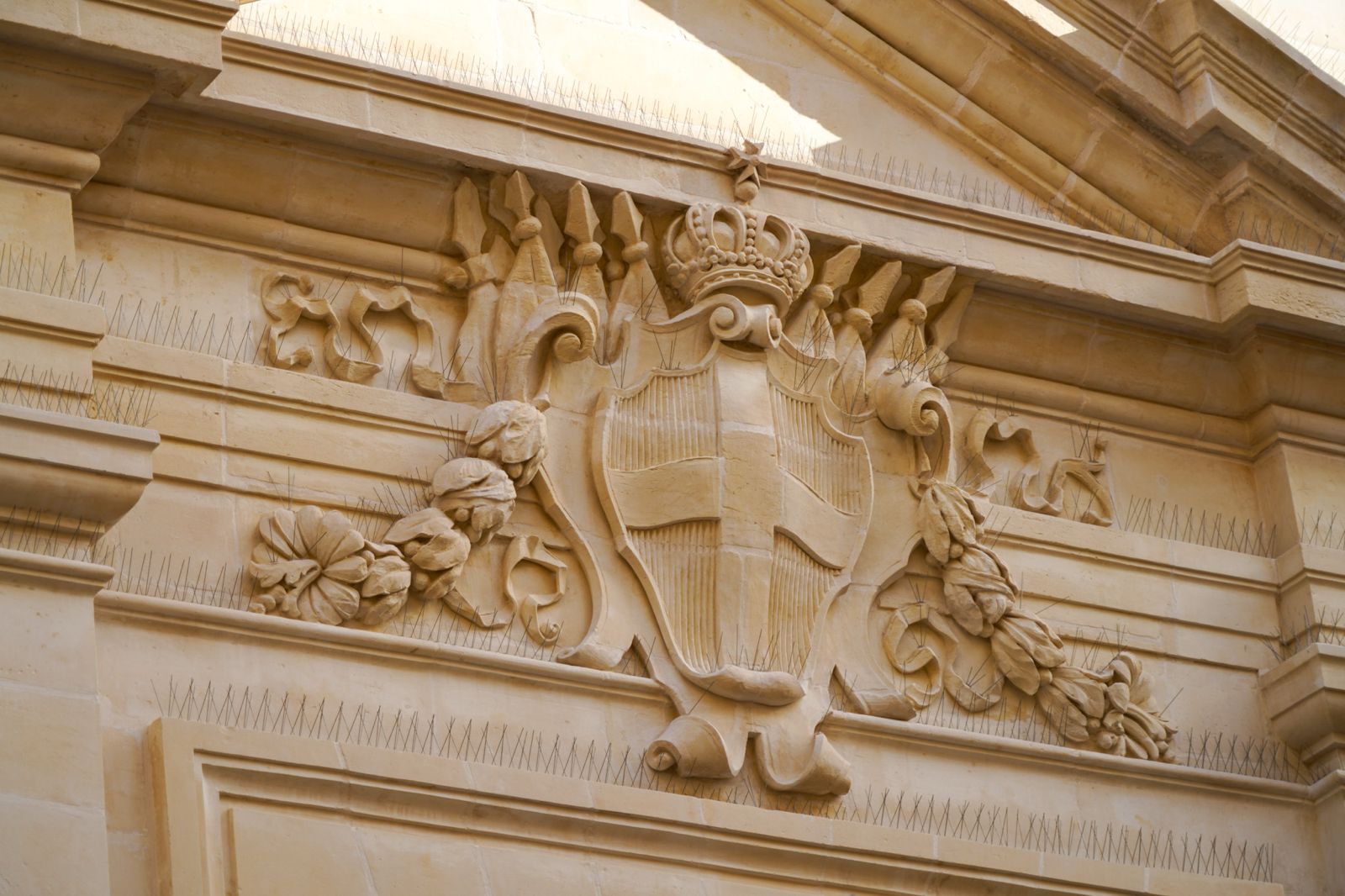
At the heart of this architectural undertaking lies the extraordinary legacy of St John’s Co-Cathedral. Beyond its celebrated Baroque interior and sacred significance, the Co-Cathedral is also home to an irreplaceable collection of art and artefacts.
Visitors encounter Caravaggio’s dramatic masterpieces, intricate marble flooring that seems almost woven into stone, richly adorned chapels, and treasures tied to the history of the Order of St John.
Among these are the monumental twenty-nine tapestries designed after Peter Paul Rubens, illustrating the ‘Triumph of the Eucharist’; works of both spiritual and artistic magnitude that require equally exceptional care.
The new museum extension is conceived as a response to that responsibility. It is a purpose-built environment designed to safeguard and elevate these fragile works. Architect Konrad Buhagiar describes the main exhibition hall as a ‘precious casket,’ a reinterpretation on a monumental scale of a reliquary – an object traditionally used to protect sacred relics. In this case, the reliquary is architectural: fifty metres long, ten metres high, and carefully proportioned to accommodate the vast tapestries in conditions worthy of their significance.
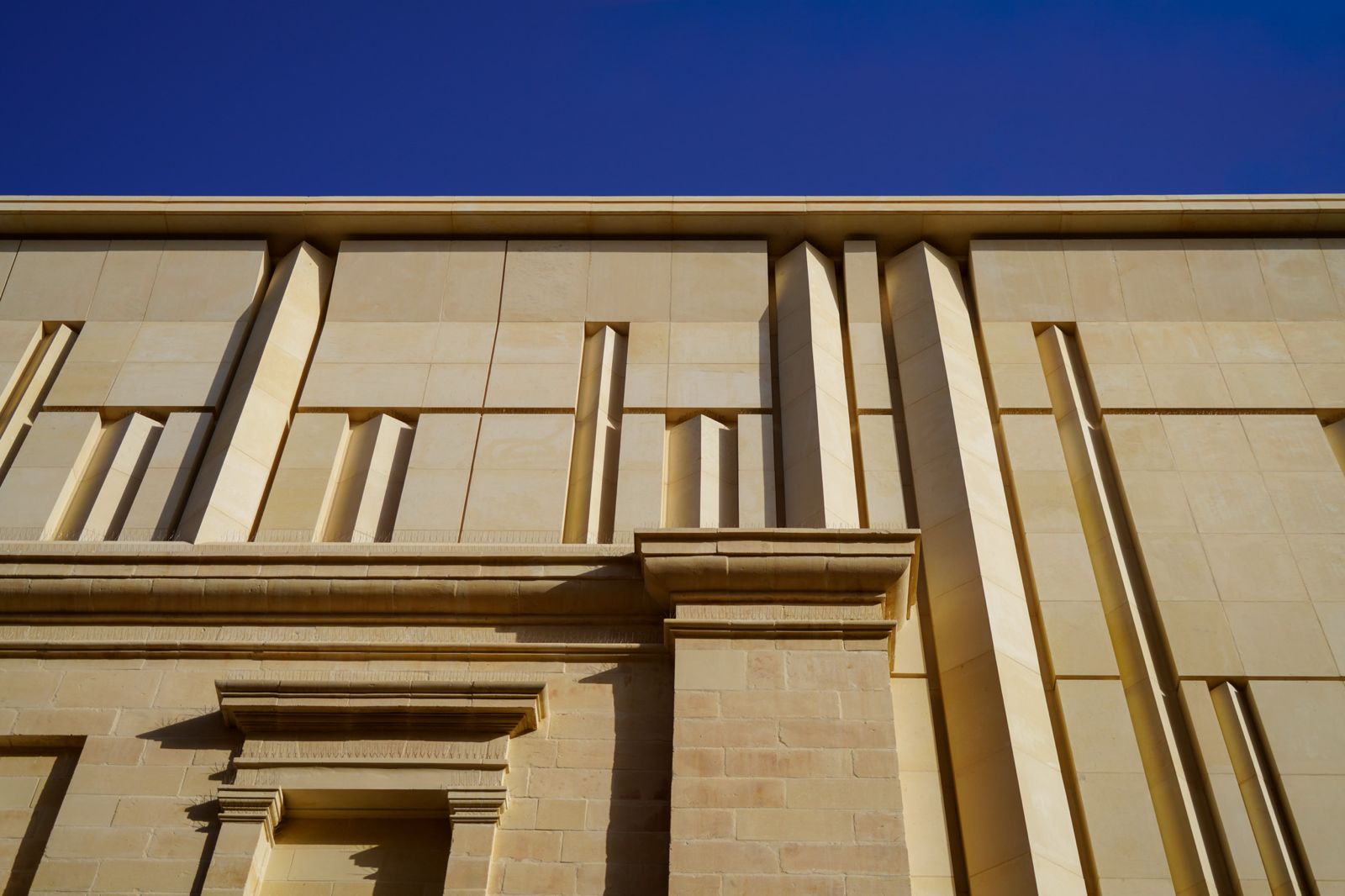
Yet what makes the project particularly compelling beyond its function is its façade – now emerging along Merchant Street. Rather than presenting a flat barrier, the design transforms the surface into a living play of light and shadow. Drawing from Renaissance principles deeply embedded in Valletta’s identity, the façade reimagines classical pilasters in a contemporary form. Slightly rotated, they catch sunlight differently throughout the day, producing a shifting rhythm of chiaroscuro that animates the stone.
The pilasters create not only rhythm but also illusion, subtly manipulating perspective so that depth appears where there is only surface. The result is a façade that feels almost cinematic in its changes – never quite the same at any hour.
The museum's remarkable façade now takes pride of place along Merchant Street and St Lucy Street, transforming an ambitious vision into a stunning architectural reality. With the exterior complete, work is now progressing inside to finish the remaining two sides of the Tapestry Chamber.
Valletta, long shaped by Renaissance ideals, gains here a new layer, one that respects its origins while confidently exploring how heritage can evolve.