Tucked away in the historic streets of Valletta lies a true jewel: one of the oldest working theatres in Europe, Teatru Manoel.
Stepping through the doors of this spectacular Baroque venue is an experience in itself, and there is perhaps no better guide than its Artistic Director, Adrian Mamo. Bringing a unique perspective forged by his dual background as an architect and set designer, he speaks to Sarah Muscat Azzopardi about the vibrant cultural hub, where history and contemporary art come together.
“What fascinates most people is that Teatru Manoel was born not out of vanity, but out of generosity,” begins Artistic Director Adrian Mamo, referencing the historic theatre’s origins.
Commissioned by Grand Master António Manoel de Vilhena in 1731, it was conceived as a teatro publico for the people of Malta. “Up until the 17th century, theatres were only built within grand palaces and were restricted to royalty and the aristocracy. Therefore, this was one of the first ever theatres built as an independent venue, open to the public. That idea – of theatre as a civic and cultural gift – still feels remarkably modern today,” he maintains.
The Manoel’s survival through centuries of turbulent history, including the heavy bombardment of Valletta during World War II, has given it a poignant place in the hearts of the Maltese people. For Adrian, this connection is deeply personal. “My own grandfather worked at the Royal Opera House, situated near City Gate, as a hair and make-up artist before it was destroyed during the war. I grew up very aware that theatres are not simply buildings; they are repositories of memory. Teatru Manoel survived, and in many ways, it became a custodian of Malta’s theatrical soul.”
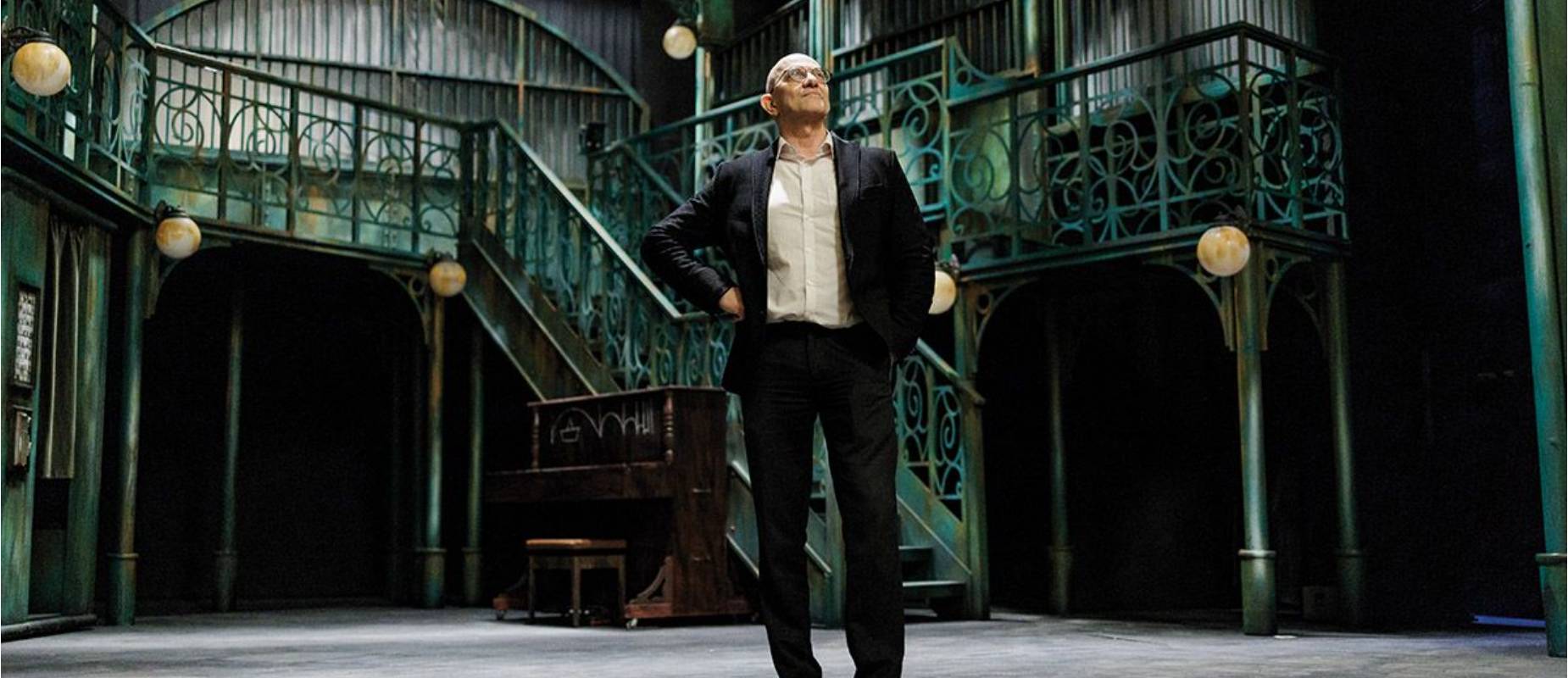
Visitors taking their seats in the historic auditorium are immediately struck by its opulence. Given his architectural background, Adrian is acutely aware of how the physical space shapes the experience.
“I think the Manoel teaches you that architecture is never passive,” he notes. “The building itself performs. Unlike many large opera houses, Teatru Manoel creates an extraordinary closeness between performer and audience. The Baroque horseshoe auditorium, the gilded boxes, the timber structure, the candlelit proportions – all of these elements shape the emotional experience before a single note is played.”
For those taking a tour or attending a show, the Artistic Director suggests paying attention to the venue’s lesser-known quirks. “One of my favourite details is actually the timber itself. So much of the Manoel’s warmth – acoustically and visually – comes from wood, and when you spend enough time here, you begin to understand how alive and welcoming the material still feels after centuries,” he shares.
He also advises visitors to cast their gaze upwards. “Many are understandably captivated by the stage, but the painted ceiling, finished in graded shades of cerulean to give the illusion of a dome, is spectacular. Also notice the rhythm of the boxes – each comes with its own mirror for spying on other boxes! It is an extraordinary example of theatrical architecture designed to heighten anticipation and spectacle,” he smiles.
Certainly, maintaining a nearly 300-year-old building while running a world-class, modern performance programme is no easy feat, he continues, viewing it as a continuous balancing act between conservation and vitality.
“A historic theatre cannot become a museum piece frozen in time; it has to remain alive,” he says. “My architectural background makes me tend to think in layers. You respect the original fabric, but you also acknowledge that every era leaves its mark. The challenge is integrating modern technology – mechanisation, climatisation, lifts, and fire systems – in ways that are sensitive and reversible.”
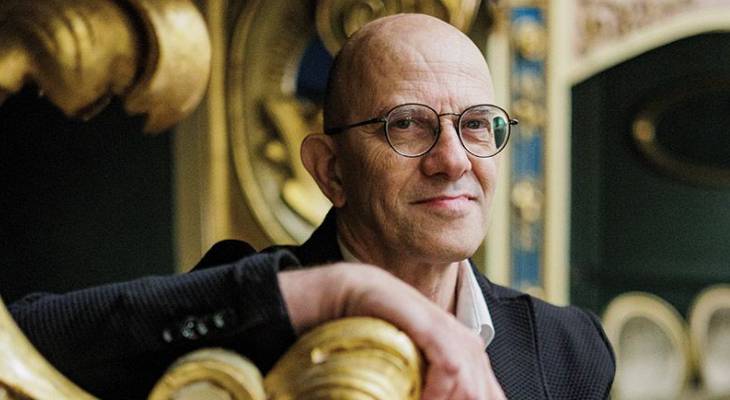
Ultimately, Adrian believes the best form of preservation is cultural relevance. “If audiences continue to feel ownership of the Manoel, and if young artists continue to dream of performing here, then the building remains relevant and cared for, not simply admired from a distance.”
When it comes to programming, the Artistic Director’s philosophy is rooted in dialogue: between the past and present, and the local and international. The Manoel serves as a proud platform for local talent – including the Malta Philharmonic Orchestra, ŻfinMalta and Teatru Malta – while regularly welcoming top-tier international productions.
“Malta has always existed at a cultural crossroads in the Mediterranean, so I think the Manoel should reflect that openness,” he says. “Ideally, international visitors discover contemporary Maltese creativity here, while local audiences encounter global artistic perspectives.”
“TOI TOI, the theatre’s dedicated learning and participation programme, is looking firmly to the future with a multi-generational project to celebrate our 300th anniversary, named Vision 2032, led by Kate Fenech Field. Through a holistic, accessible approach to educational theatre programming, TOI TOI helps to develop our audience from babies to senior citizens,” he adds.
“My hope is that the Manoel continues to evolve without losing its soul,” he reflects. “Historic theatres survive not simply because they are beautiful, but because people continue to gather in them to share stories, music and emotion. That human encounter is timeless.”
The Artistic Director’s must-see picks
Planning your visit? These are Adrian’s hand-picked selection of productions from the theatre’s vast calendar of around 50 events.
“What I always encourage visitors to experience is variety, because the Manoel reveals different facets of its personality depending on the performance,” he says.
Night at the opera: “The theatre’s proportions and acoustics are exceptionally suited to opera – there is something almost transportive about hearing the human voice in that space. In January 2027, Festivals Malta will present Handel’s Giulio Cesare in Egitto, and in March we will be staging Gounod’s Romeo & Juliette in collaboration with Malta National Opera.”
Intimate chamber concert or recital: “We are proud to present four concerts by the De Valette Chamber Orchestra, with musicians hand-picked from Europe’s best orchestras. We also have an evening dedicated to Maria Callas in July 2027.”
A contemporary Maltese production: “We will be staging the winning play of the Studio Francis Ebejer Playwriting competition, Il-Madonna tad-Demm u l-Kartapesta by André Mangion, in March 2027.”
One for jazz lovers: “In March 2027, the National Agency for the Performing Arts will present a jazz concert dedicated to the music of Antonio Carlos Jobim.”
Annual favourites: “I cannot fail to mention annual favourites like the Valletta Baroque Festival in January and the Christmas Pantomime, which this year is Peter Pan presented by the Malta Amateur Dramatic Club (MADC). Also, Moveo’s version of Tchaikovsky’s Nutcracker that opens the Christmas season in early December, the Malta Spring Festival in May, and the International Arts Festival in June. Our annual musical production this season will be Peter Quilter’s End of the Rainbow based on Judy Garland's last days in London.”
CLASSICS: Oscar Wilde’s Salome will be staged in November; H.G. Wells’ The War of the Worlds – part of the TOI TOI Classics series, written by Rhum+Clay with Isley Lynn – and Dostoevsky’s Grand Inquisitor will be staged in April.
This article was first featured in the 100th edition of GuidemeMalta 2026.