Malta’s unsung heroes: Joe Micallef, who survived the sinking of Mountbatten’s ship
Joe and Lord Mountbatten maintained their relationship even after Joe was discharged from service.
This one’s for the history buffs! In this series, we’re taking a look at some of Malta’s unsung heroes and this time, we’re shedding light on a certain Joe Micallef, a former Petty Officer with the Royal Navy.
In his first volume of ‘Malta’s unsung heroes,’ Alfred Conti Borda compiles information on the officer, obtained through his children Dr Joe Micallef Stafrace and Retired Wing Commander Denis Micallef. Here we’re turning back time to World War II times and the infamous sinking of the HMS Kelly.
Joe’s early days
Joe Micallef was born on 6th June 1906 in Valletta. Prior to joining the Royal Navy, Joe was his dad’s tailoring apprentice. His son Denis thinks he must have joined the navy when he was 19 years of age, in around May 1925 and his first post was on the destroyer HMS Keppel. He also served on the HMS Barham for three years, and on the HMS Egmont (later renamed to HMS St. Angelo) for eight years, among other destroyers over the years.
“Living in St. Nicholas Street in Valletta was an added bonus to Joe’s children. As soon as they would know from him the time that he was sailing out of the Grand Harbour, they would scurry up to the roof and wave merrily at Joe’s ship, hoping that dad would see them,” Alfred recounts in the book.
Joe & Lord Mountbatten
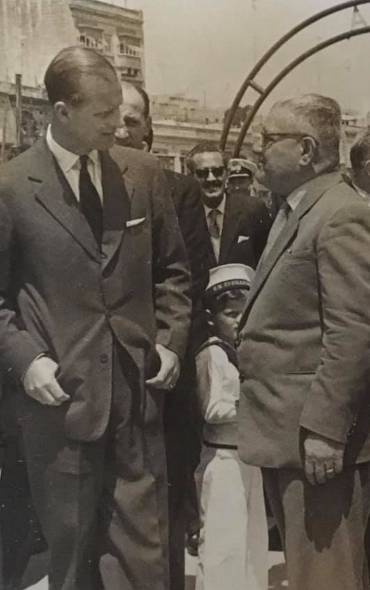
Denis Micallef via The Malta George Cross Movement
/ Facebook
Yes, Joe served alongside Lord Louis Mountbatten (Prince Philip’s uncle who resided at Villa Guardamangia). The two met in early 1937 when Mountbatten was the captain of HMS Wishart. “Joe was keen on dinghy rowing and was unbeatable among the ratings. Lord Louis took an interest in him because he too was a keen and able oarsman.” Mountbatten asked Joe to join his crew as his personal Officer Steward on board the HMS Kelly three months before its commissioning in 1939. Joe went on to become one of the few ratings who served on the ship for its entire life.
What lead to the sinking of HMS Kelly
April 1941 was quite hectic for Kelly as she was in Malta for “three tortured months” enduring the continuous bombardment of the islands along with sweeping shipping lanes. After a staff conference, Mountbatten rallied the troops and gave them orders from the Admiralty: Kelly was to set sail to restrain the Germans from capturing the Greek islands.
That same evening, they were off followed by destroyers Kasmir, Kipling, Kelvin and Jackal. The night and morning were very quiet but it wasn’t long before the radio operator picked up a message to bombard Maleme aerodrome which was occupied in enemy hands.
By 8am Kelly’s radar had picked up a large formation of aircraft: 24 Junker Stuka dive bombers, according to the captain. “He was especially wary of them as by their diving almost vertically and bombing they could hardly miss their target.” Kashmir was the first target and it disappeared into a belch of smoke and flames.
Then came the attack on Kelly. Enemy bombers bore down on the shop but Petty Officer Ted West was an Oerlikon anti aircraft gun enthusiast. As Mountbatten ordered the ship to be zigzagged to avoid the bombers from every direction, West managed to take down one of them, which disintegrated in a few seconds. However, another bomber sneaked in, dropping a 1,000 pound bomb which went right through the deck and exploded Kelly’s vitals “blowing half her bottom out and raising a blast of smoke and flame, pieces of steel and human bodies.” Mountbatten gave the order to abandon ship.
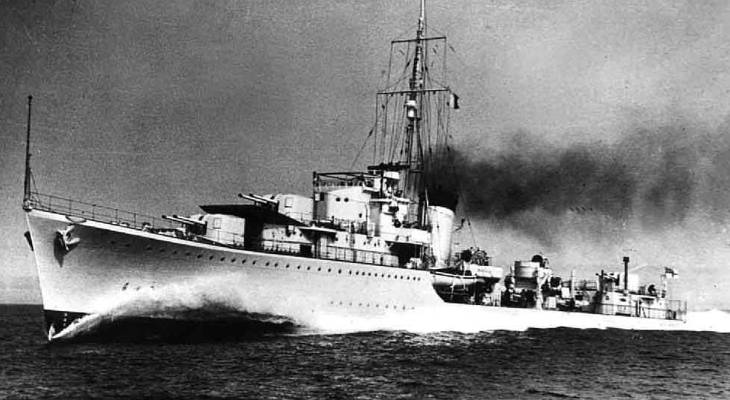
Keith Tatum via Gzira Task Group (For source branch buntings) / Facebook
Maltese Leading Steward Domenico Aquilina lost his life in the blast, and Petty Officer Joe Micallef was blown over Kelly’s side into the sea aflame with fuel oil. While hanging on to a life raft, Nazi aircraft circled back to bomb the survivors. As a result, Joe was not only severely burnt but wounded and blistered by splinters. He also lost a kneecap. He managed to haul himself painfully onto a wooden plank, but others were not so lucky. Mountbatten repeatedly dove after his men, dragging survivors to a float.
As the scene quietened, the surviving seamen saw their beloved Kelly slip into the depths of the ocean and out of sight. Three hours later Kipling arrived after having been attacked as well. The ship managed to shake off the bombers and picked up survivors along the way, including Joe. “He was taken unconscious together with the injured crew to the hospital ship HMS Maine in Alexandria and did not come round until almost three weeks later on 12th June 1941.”
His wife was told he was ‘missing presumed dead’ and it was only later that she was informed of his condition. Joe spent 11 months at the hospital before returning to Malta where he was admitted to the Mtarfa Military Hospital.
Mountbatten had personally said: “I found out that my Leading Steward Domenico Aquilina had been killed and that my Petty Officer Steward Joe Micallef had been seriously injured and badly burnt. I was particularly sad about this fore they were the only two of the original Maltese retinue who had volunteered to say with the ship when the remainder were released on our not going to the Mediterranean.”
After the attack
Joe endured 13 months of recovery and rehab at hospital and returned home on crutches and invalidated out of the Royal Navy on 10th February 1942, after 15 years of service. Once the war was over, Joe served as a civil servant for 20 years with the Royal Air Force.
Even though Kelly was lost, Joe and Mountbatten still continued their close relationship. When visiting Malta, Lord and Lady Mountbatten made it a point to meet Joe. The greatest compliment would definitely have been Mountbatten’s recommendation to the Queen and Prince Philip for Joe to be their butler while living on the islands.
Joe often commented it was a happy household and “it was like working with a family of your own.” Following Her Majesty and the Duke’s return to the UK, they never forgot him. Beside correspondence, Joe received an annual royal Christmas card from them, until Joe’s demise. And that’s not all! Joe and his wife were cordially invited to the Queen and Prince Philip’s 25th wedding anniversary celebration in 1972. Her Majesty invited them to visit London and attend the reception at Buckingham Palace.
Later in life
Mountbatten and Micallef kept in contact regularly and whenever the Lord would visit Malta, the pair met up – Micallef even greeted him on the apron of Luqa airport. Correspondence was regularly exchanged until Mountbatten’s untimely death by a booby-trap set on his boat in 1979 in Ireland. As a result of the news, Joe’s health suffered tremendously. He and Kelly survivor Salvo Baldacchino attended the Lord’s funeral at Westminster Abbey.
Joe spoke very little of his experiences until he was interviewd by Xandir Malta for a radio programme and for the book by William Pattinson entitled ‘Mountbatten & The Men of the Kelly.’ However, when he was asked the Press to speak about the Royal family, he politely declined.
Joe Micallef is one of the many unsung war heroes. Thank you for your service, Petty Officer Joe Micallef. We salute you.