A sweet legacy! Meet the local beekeeper with a family tradition dating back to 1898
Deep in the valley of Għargħur lies an enchanted garden filled with fruit trees heavy with ripe apricots and pomegranates, and overgrown with poppies and daisies.
There’s a barn full of jet black cockerels, indigenous to the Maltese islands, who roam around freely amongst the thistles. The vineyard opposite is patiently waiting for its season to come, where it will flourish with a bounty of juicy red grapes to be turned into homemade wine.
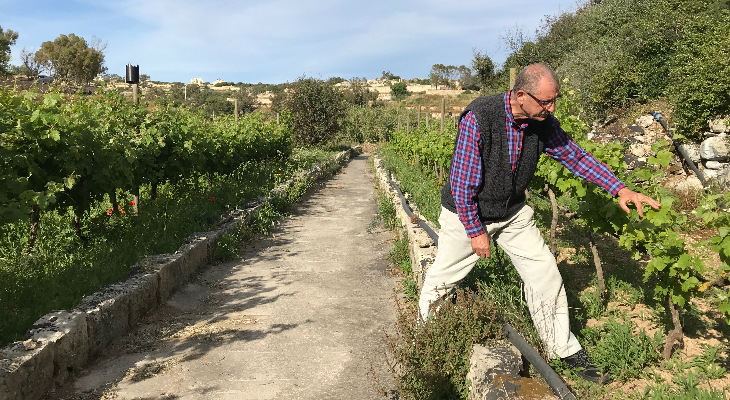
Mario in the vineyard. These grapes will be turned into a homemade Syrah wine
But most notable are the beehives - about 70 in total - full of working bees busy with their duties of turning nectar into delicious honey.
Mario Sant is a beekeeper who’s family tradition dates back to 1898. His great grandfather took over this piece of land all those years ago and the art has passed through generations of caring hands. An ex-banker, Mario has now retired to do what he loves best, and is the treasurer of the Malta Beekeeping Association.
His love for this passion shines through as he quietly talks us through the beekeeping process. The pottery vessel design set up for the bees to produce their honeycombs has been used since Roman times, and the ones in this very apiary are hundreds of years old. They are placed in a strategic position – sheltered from the north west winds, and facing south east, so that the first glimpse of morning sun shines through the small holes in the vessels, marking the beginning of another day.
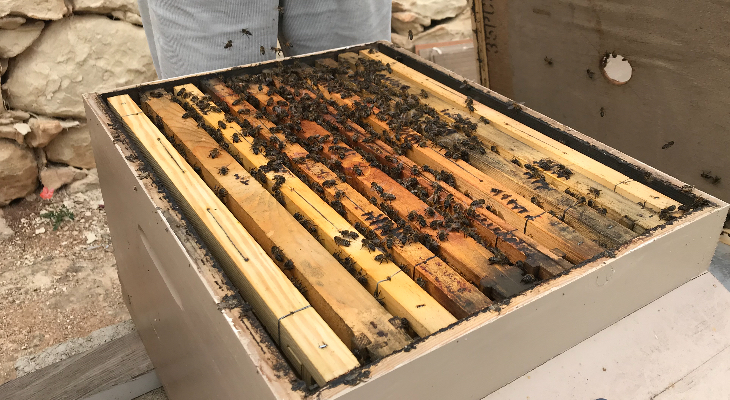
Working bees busy producing honey
Maltese honey is known the world over, in fact, the word Malta comes from the word miele, meaning honey. Under Arab rule, this word turned into melita, which is the old name for Malta, so our islands have been well known for our namesake for thousands of years!
Honey has many health benefits and has an indefinite shelf life. It is completely self-processed by the bees themselves. It has antibacterial properties that make it non-perishable, and honey has even been found in ancient Egyptian tombs - still edible!
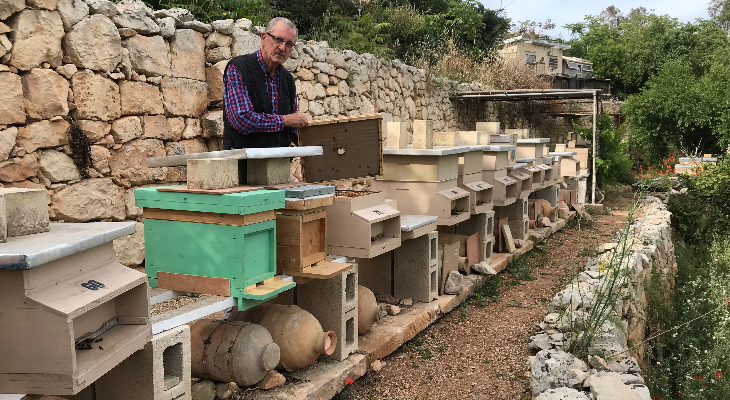
The pottery vessels and wooden frames are full of honeycomb!
Bees can only fly so far, so the bees on our shores are national Maltese specimens, the apis malifera ruttneri. Mario tells us that our bees are at risk when their habitats get destroyed to be built over, as they need wild flowers to flourish. Climate change is also a factor, he tells GuideMeMalta.
Once we have visited the field, it was now time to check out the rest of the process. Mario doesn’t see himself as “the man who makes honey” as he is referred to across the islands, he is the “man who steals the honey”, he says, jokingly. But he is meticulous in his process, and dedicated to his work and the conservation of this dying tradition. “Beekeeping is seen as a male job in Malta, whereas in the rest of Europe it is actually predominantly female” he tells us. He hopes that his grandchildren will grow up adoring the fields, as he did as a child, and carrying on with the family trade.
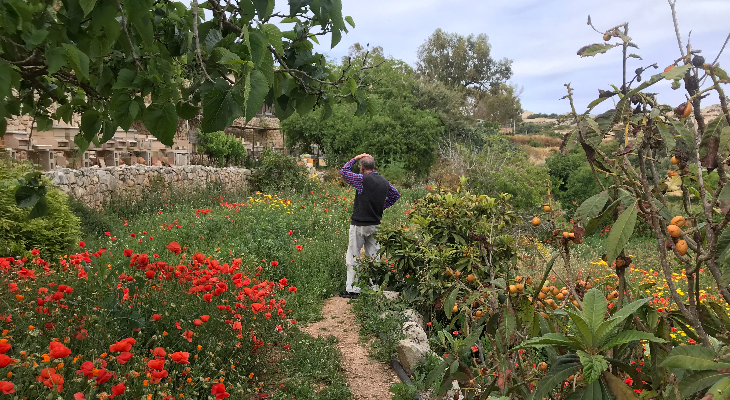
The valley is full of wild flowers and fruit trees
Once the honeycomb has been collected, it’s off to the workshop, where the frames heavy with honeycomb and dripping with sweet nectar are placed in a large urn that is spun vigorously by hand, so that the honey from inside the frames flies out onto the side of the urn. Once this is done, the sweet multi-floral honey drips down the side of the vessel and is let out from a tap emitting pure golden liquid honey, which is collected into a pot. From here it is put through a filter and is ready to be poured into jars and shelved, ready to go!
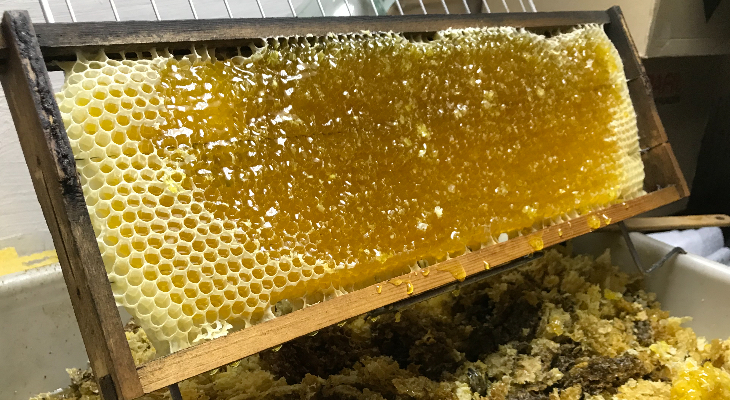
A frame full of honeycomb back at the processing workshop
The beeswax is melted down into blocks and is either sold to beauticians or used as furniture polish or candle wax, which lets off a beautiful natural scent when burned. Nothing is wasted, and the scrap from the process is given back to the bees once more for them to make use of the protein and restart the process. Next season, the bees will be collecting their nectar from wild thyme, producing a darker honey from the summer crop.
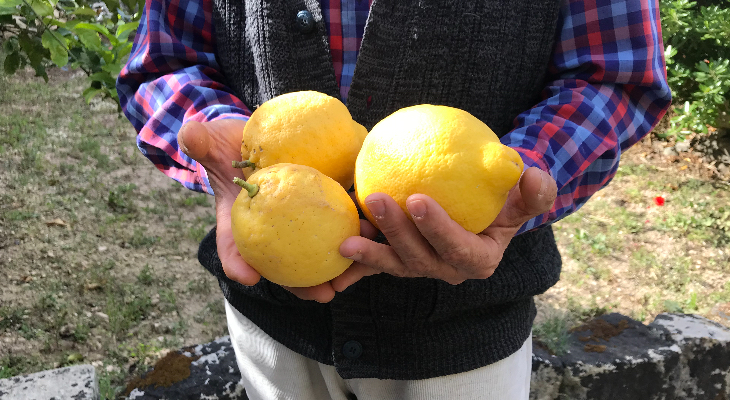
A bounty of fresh lemons!
Mario often shows visitors around his field, be it school children or interested tourists, and we can see why! It’s a true taste of Malta that so often goes unnoticed past the tower blocks and modernity. We leave with a jar of honey and some fresh lemons, the largest we’ve ever seen! We thank Mario and assure him we will make use of the citrus fruit for lemonade and a homemade meringue. What a sweet sensation indeed.