Small in size yet rich in character, Gozo offers visitors a slower, more immersive Mediterranean experience shaped by history, sea, food and village life.
There are places you visit, and there are places that quietly stay with you. Gozo belongs to the second kind. Just a short ferry crossing from Malta, the island feels close enough to reach with ease, yet distinct enough to offer a complete change of rhythm. The journey across the channel already gives a hint of what lies ahead: open sea, views of Comino, the outline of Mġarr Harbour and, beyond it, an island shaped by history, faith, food, village life, and a natural sense of calm.
Gozo is often referred to as Malta’s sister island, yet anyone who spends time here quickly discovers a destination with an identity, rhythm and character of its own. It is smaller, quieter and more rural, yet full of life in ways that are not always obvious at first glance. Its charm is found in the contrast between stillness and celebration, between early morning swims and lively village feasts, between silent valleys and squares filled with music under the summer sky. This is why Gozo deserves more than a brief visit. A day trip may offer a glimpse, but a stay of a few nights allows the island to reveal itself properly.
The heart of Gozo beats in Victoria, the island’s capital. Here, narrow streets, shops, churches, cafés, and cultural spaces come together around the historic Cittadella. Rising above the town, the Cittadella remains one of Gozo’s defining landmarks, a fortified city that has watched over the island for centuries. From its bastions, the view opens out in every direction, taking in villages, countryside, church domes, and the sea. It is one of those places where Gozo’s compact size becomes part of its magic, as the whole island seems to gather into one sweeping panorama.
Yet Gozo is not only about its main landmarks. Much of its appeal lies in the way discovery happens naturally. A short drive or walk can lead to a quiet chapel, a valley, a coastal path or a village square where life carries on with its own familiar pace. Lunzjata Valley, for example, offers a rural retreat between Victoria and Kerċem, with fields, old stone walls and a sense of shade and shelter. Ta’ Pinu Sanctuary, standing in the open countryside near Għarb, offers another kind of pause, whether one visits for prayer, architecture, reflection or simply to admire its setting against the landscape.
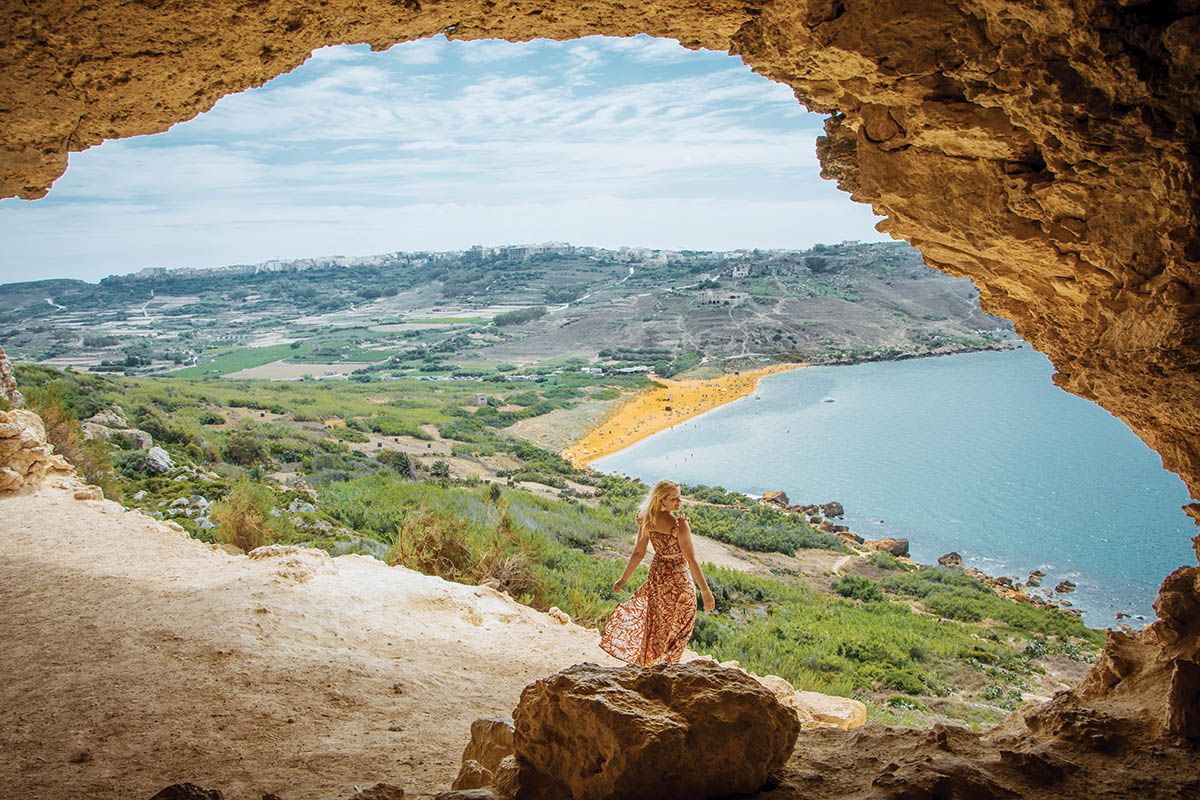
For many visitors, Gozo’s coastline is one of its strongest invitations. The island is full of beaches, bays, coves, and cliffs, each with its own mood. Ramla Bay is among the best known, loved for its wide stretch of red sand and open views. San Blas, smaller and more secluded, carries a wilder appeal, reached by a steep path that helps preserve its peaceful atmosphere. Ħondoq ir-Rummien and Daħlet Qorrot offer clear waters and a more local seaside feeling, while Mġarr ix-Xini, tucked at the end of a narrow inlet, has a quiet drama that makes it memorable.
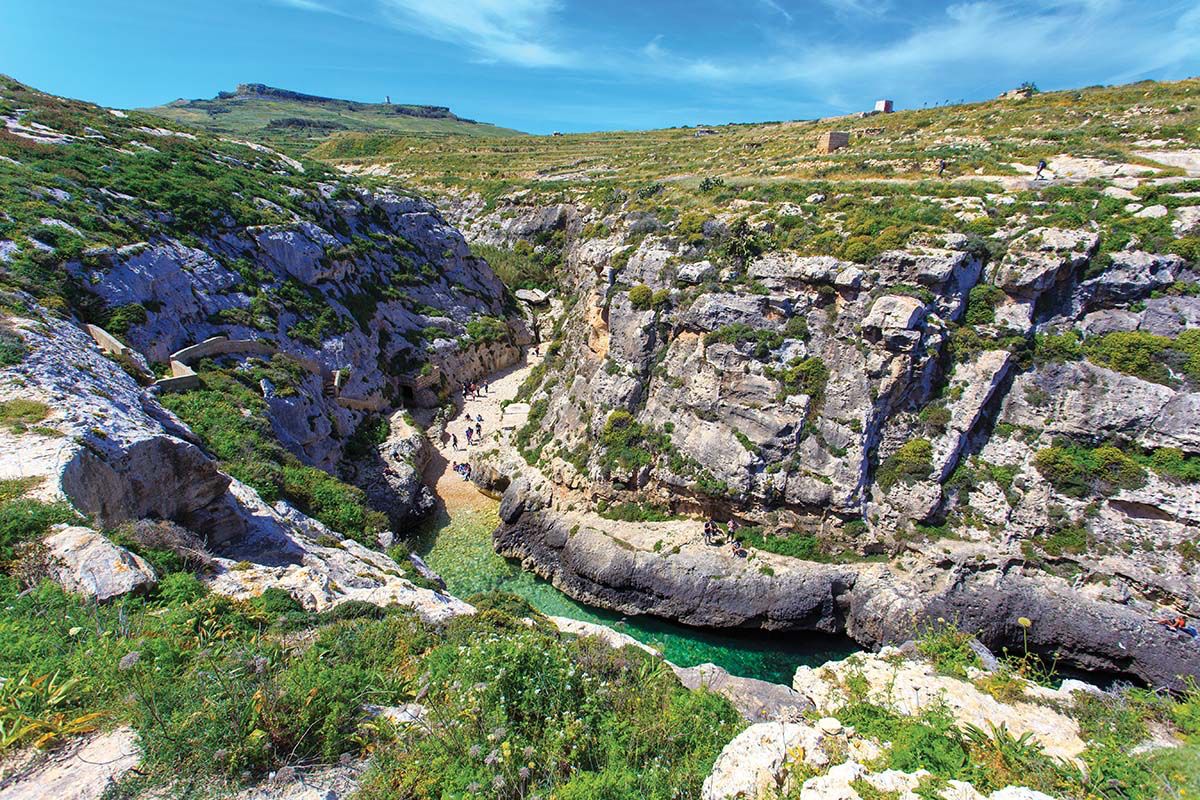
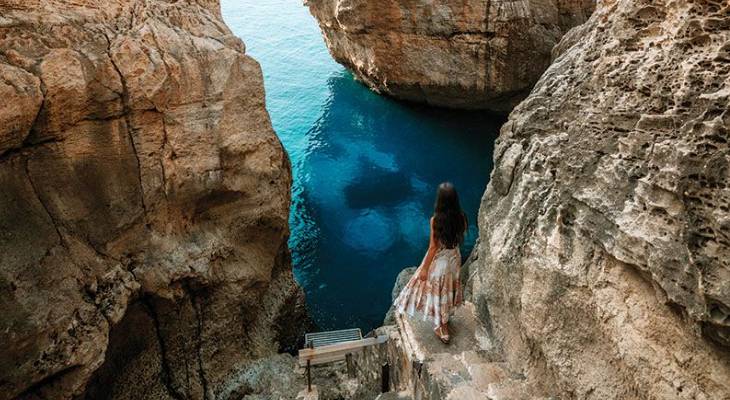
Then there are the rocky places, where Gozo feels carved by sea and time. Dwejra remains one of the island’s most striking coastal areas, with its inland sea, cliffs and sunset views. Wied il-Għasri, a narrow inlet reached by steps cut into the rock, feels almost hidden from the world. Xwejni and Qbajjar bring together coastal swimming spots, traditional salt pans and wide skies, especially beautiful when the light begins to soften. Around Xlendi, rocky ledges, coastal walks and views from the tower create a landscape that can shift from leisurely to dramatic within minutes.
To see Gozo properly, one should also take to the water. A boat trip around the coast opens up a different perspective of the island. From the sea, cliffs rise with greater force, caves and inlets become more visible, and hidden swimming spots feel even more special. Some trips explore Gozo’s own shoreline, while others continue towards Comino, with its luminous lagoons and open waters. Whether it is a short sightseeing tour, a private charter, a family outing or a sunset cruise, time at sea brings a sense of freedom that belongs naturally to a Gozo holiday.
Summer gives the island a particularly vivid energy. Long days are made for swimming, snorkelling, boat trips, kayaking, paddleboarding, and lazy hours by the water. Evenings bring another rhythm altogether. Village feasts fill the season with band marches, decorated streets, church celebrations, fireworks, and a strong sense of community. These are not performances staged only for visitors. They are living traditions, rooted in local devotion and village pride. For those staying on the island, attending a festa is one of the best ways to feel Gozo’s spirit from within.
Beyond the feasts, Gozo’s calendar offers concerts, open-air events, food festivals, art exhibitions, theatre, opera, traditional dinners, and family activities throughout the year. Summer nights are especially active, with music in village squares, harbour settings, cultural venues, and historic spaces. Autumn brings opera and a more refined cultural tempo, while winter has its own charm through Christmas events, Carnival and quieter countryside days. Easter, too, has a deep presence on the island, with processions and traditions that reflect Gozo’s religious and cultural identity.
Food is another essential part of the experience. Gozo’s flavours are rooted in the Mediterranean, in seasonality and in the simple pleasure of eating well. A day by the sea may call for ħobż biż-żejt, the much-loved Maltese bread with tomatoes, tuna, olives, capers, and olive oil. A leisurely meal may lead to fresh fish, local cheeselets, sun-dried tomatoes, rabbit, handmade pasta, seafood platters or seasonal fruit. In seaside villages such as Xlendi and Marsalforn, dining close to the water becomes part of the holiday mood, particularly in the evening when lights shimmer across the bay.
Still, Gozo’s greatest luxury may be space. Space to slow down, to wake early for a swim, to follow a country path, to watch the sunset from Dwejra or Ta’ Ċenċ, to sit quietly in a church, or to wander through a village. The island has embraced modern life, yet it has not lost its instinct for pause. Here, the beach, the countryside and the village square are never far away.
This is what makes Gozo more than an excursion. It is a destination for those who want their holiday to have variety without rush. One day may be dedicated to history and culture, another to beaches and boat trips, another to food, villages and coastal walks. Families, couples, solo travellers, divers, hikers, photographers, culture lovers, and those simply seeking rest can all find their own version of the island.
Gozo does not need to be hurried. In fact, it is best understood slowly. Stay long enough to see the morning light over the sea, the afternoon glow on limestone, the evening life of the squares, and the silence that returns after sunset. Stay long enough for the island to become more than simply a place on your itinerary. In Gozo, the real discovery begins when you give yourself time.
Are you planning on visiting Gozo this summer?
This article was first featured in the 100th edition of GuidemeMalta 2026.