




Well done Kopila! Marsaxlokk-based barista wins European competition
Kopila will now represent Europe at a global competition in London!




Take away the sea and there's simply no more Malta as we know it.


From the very beginning, Malta’s story has been inextricably tied to the sea. From the way it came to be an archipelago of islands to its long maritime history through the ages, the sea has been the main character of every chapter. Let’s take a look.
There is increasing evidence that the area of the Mediterranean Sea was once a basin of dry land below sea level. When the land bridge that connected Europe to Africa crumbled at the Straits of Gibraltar, probably due to earthquakes, the Atlantic flooded the basin and formed the enclosed Mediterranean Sea. The islands of Malta are the tops of mountains that lay in that basin. A land bridge that once connected the islands to Sicily was also submerged with time.
View this post on Instagram
Malta’s topology of limestone and the wide variety of sea fossils it contains suggest that, much earlier, the land was completely submerged by a sea older than the Mediterranean. Limestone is a sedimentary rock made from the remains of ancient sea creatures, and is the principle material that makes up the Maltese Islands. An upward movement of the Earth's crust five million years ago caused a dam at the Strait of Gibraltar, sealing it off from the Atlantic and causing it to dry up before it flooded again, much later. From massive seashells to prehistoric shark teeth, including those from the monstrous 60-foot Megalodon, can be found even in the heart of the island.
View this post on Instagram
From the beginning of recorded history, seafarers found their way to the Maltese Islands and used their strategic position in the heart of the Mediterranean to serve their purposes.
View this post on Instagram
The Phoenicians already used Malta as a trading post and shelter before 1,000 BC, not unlike the transhipment industry that has developed in modern times. The Phoenician colony that settled on the islands around 750 BC became a naval base for Carthage by 480 BC.
View this post on Instagram
In 60 AD, St Paul was shipwrecked on Malta. This is a huge event in Maltese history as the conversion of the Maltese people to the Catholic faith, which is predominant on the islands, is attributed to this visit. The locally revered Saint Publius, Prince of Malta at the time, was the first convert and first Bishop of Malta.
View this post on Instagram
The Romans, the Vandals, the Goths, the Byzantines, the Aghlabid Arabs, the Fatimids, the Normans, the Swabians, the Angevins, the Aragonese and the Sicilians (have I missed anyone?) all crossed water and took the islands as their own at various points in time. With Malta being isolated, there were few forces that could ward off any invasion. All these occupations left their mark on the Maltese language and culture to the present day.
View this post on Instagram
In a similar way, Malta and Gozo were subject to numerous attacks by pirates and corsairs. The Barbary Corsairs were wreaking havoc in the Mediterranean around the 16th century. In July 1551, the famous Invasion of Gozo saw most of the population stolen from their mother land to be sold as slaves. Actually, Malta itself was a centre for human trafficking during the Hospitaller rule, mainly to provide galley slaves. Legal documents detailing these transactions exist aplenty in the Maltese legal archives.
View this post on Instagram
The Knights of Malta are largely responsible for shaping the islands with their fortified cities, fortresses and palaces. Granted the islands partly to protect the Mediterranean from the corsairs, on their arrival in 1530, their seafaring nature and fleet of galleys made Mdina useless as a capital, forcing the Knights to found an alternative. They modified the Arab-built Castrum Maris castle on the Birgu peninsula to make it a fort, thus bringing bastions to the Maltese Islands, and later gave the same treatment to Mdina and the Citadel to make them gun-worthy at a time when the medieval cities’ defences had become obsolete. They also built several other forts, batteries and watchtowers along the entire coast, as well as the magnificent capital city of Valletta.
View this post on Instagram
Napoleon evicted the Order from the Maltese Islands quite suddenly in 1798; they were unprepared for an attack and simply moved out after 268 years of rule. The British moved Napoleon out two years later, at the request of the Maltese, who deeply disliked the French rule. The British would rule Malta from 1800 until 1964, impregnating the Maltese culture with many of their customs and their language.
View this post on Instagram
Malta was involved in two world wars under the British rule. Its strategic position in the centre of the Mediterranean caused it to be an important chess piece in both the wars. Knowing this, the enemy heavily bombarded the islands, destroying and killing in the wake of war. Salvation of the Maltese population from starvation and possible extinction is attributed to the arrival of the Santa Maria convoy, which also enabled the resistance to continue. While many ships and many lives were lost, the supplies that reached the island enabled a complete turn in the outcome of the war to victory.
View this post on Instagram
Even since the British Navy left Malta in 1979, Malta’s many harbours have continued to see ships of all kinds coming and going. The Freeport in Birzebbuga sees tankers exchanging containers of goods on a daily basis, in keeping, somewhat, with the ancient Phoenician tradition. The Grand Harbour was home to the Malta Ship Building until quite recently, and now Palumbo Ship Yards, offering dry docking, repairs and oil rig services. Nowadays, massive Cruise Liners and small Maltese dghajjes (boats) ferrying tourists share space in the Grand Harbour.
View this post on Instagram
Found all this interesting? Delve a little deeper with a visit to the Malta Maritime Museum in Birgu. Through numerous artefacts housed within the Old Naval Bakery, the Malta Maritime Museum charts Malta’s maritime history and lore, and illustrates how the global nature of seafaring has impacted Maltese society.
Attractions
Kopila will now represent Europe at a global competition in London!
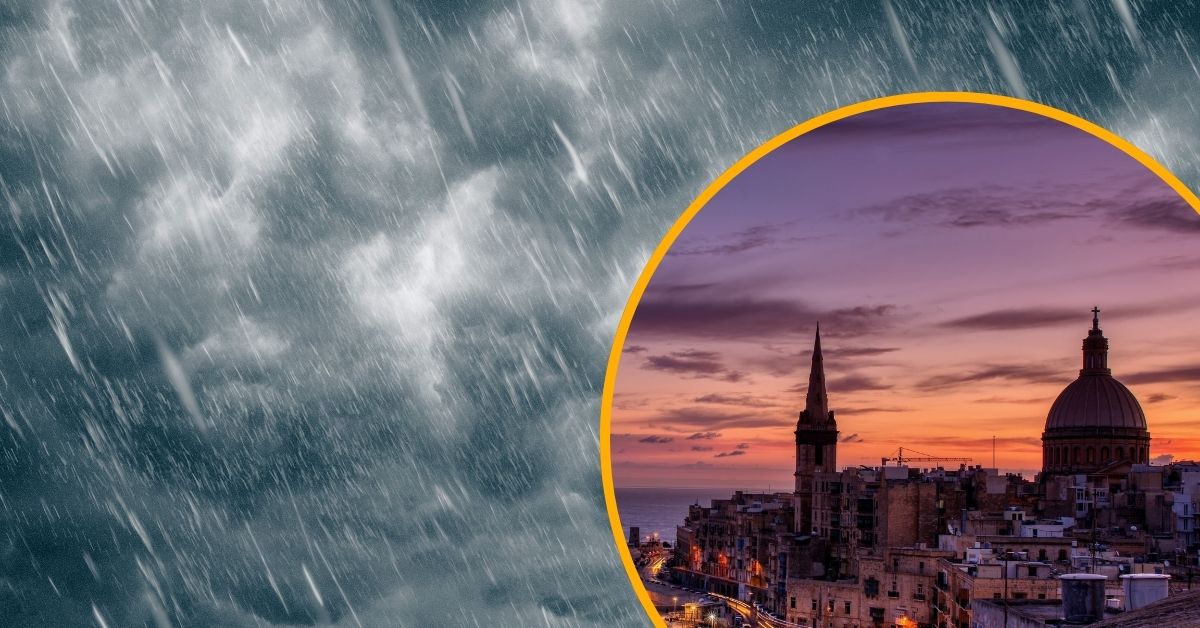
Partly cloudy skies expected on Saturday before possible thunderstorms on Sunday

Collar will be performed at Teatru Manoel's studio theare on 14th November

Perf & Co offers branded fragrances at discounted prices up to 20% off!